Assignment
Navigate: Content > Search Content or + Icon > Assignment
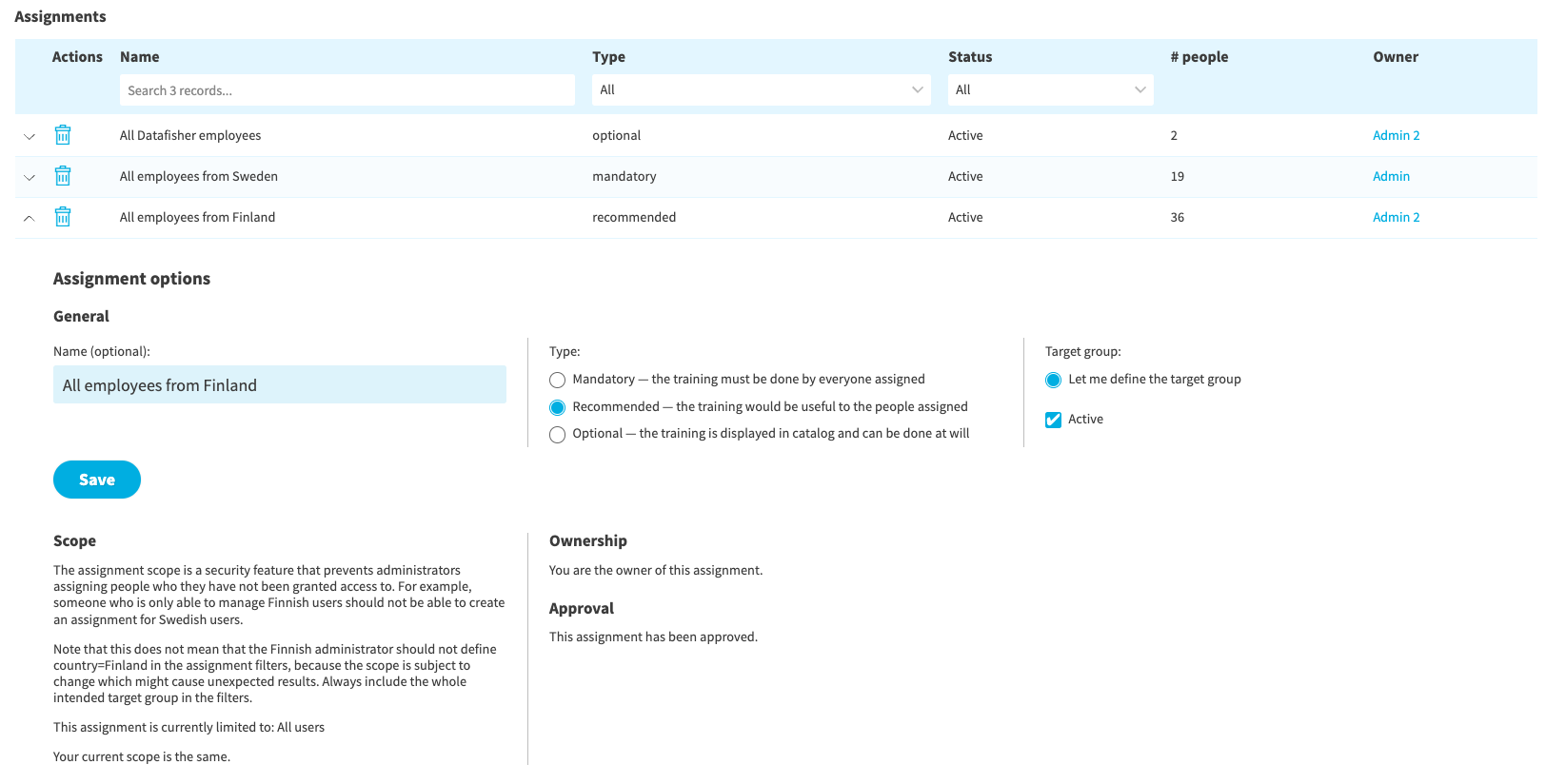
The Assignment tab controls which learners can access a training and whether the training is mandatory, recommended, or optional for them.
A content item can have multiple assignment groups. If a learner belongs to more than one group, the strongest assignment type applies: mandatory overrides recommended, and recommended overrides optional.
In this section
- Assignment types – understand mandatory, recommended, and optional assignments.
- Assignments – review and manage existing assignment groups.
- New assignment – create an assignment group with a name, type, and target group.
- Assignment filters – define the target group with filters.
- Manual assignment – add specific learners manually.
- Scope and approval – understand user-scope limits and approval requirements.
- Claiming ownership of an assignment group – take responsibility for an assignment group when needed.
Assignment types
There are three assignment types:
- Mandatory – assigned learners must complete the training.
- Recommended – assigned learners are encouraged to complete the training.
- Optional – the training is shown in the catalog for assigned learners and can be completed voluntarily.
Assignments
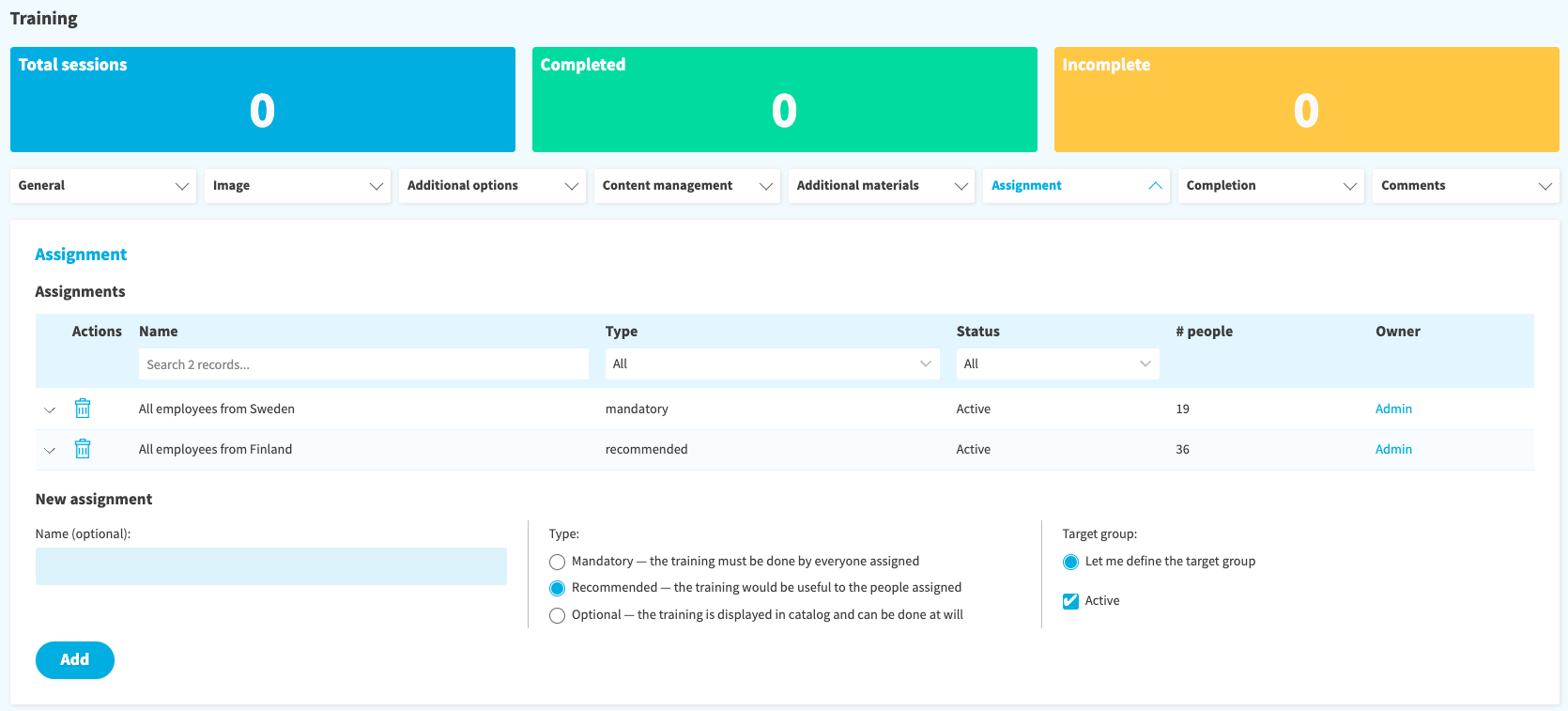
The Assignments table lists existing assignment groups for the content.
The table shows columns such as Name, Type, Status, People, and Owner:
- Name – the assignment group name.
- Type – mandatory, recommended, or optional.
- Status – whether the assignment group is active or inactive.
- People – how many learners belong to the assignment group.
- Owner – the admin user who owns the assignment group.
Opening an assignment group shows its details and rules.
You can edit only the assignment groups that you own.
New assignment
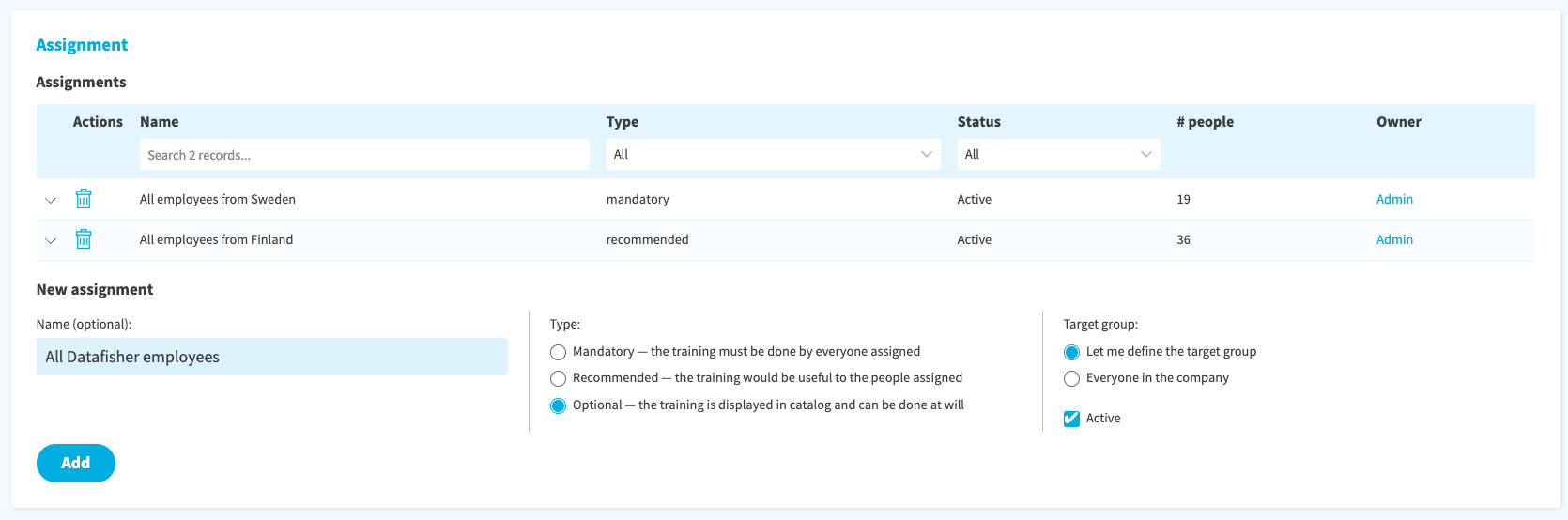
New Assignment creates a new assignment group.
The main fields are:
- Name – a descriptive name for the assignment group.
- Type – mandatory, recommended, or optional.
- Target group – choose whether to define the learner group with filters and manual assignment.
- All users – assign all learners in your user scope when this option is available for the selected assignment type.
- Expires on – the date when the assignment group expires.
- Due date – the expected completion deadline for learners in the assignment group. Due dates can be used by notifications and reporting.
- Active – whether the assignment group currently applies.
Assignments can use a defined target group or all users, depending on the selected assignment type and LMS policy.
After the assignment group is created, its type, target group, dates, active state, and assignment rules can still be edited.
Inactive assignment groups do not apply to learners. Use this when an assignment should be kept for history but should no longer assign the content.
Assignment filters
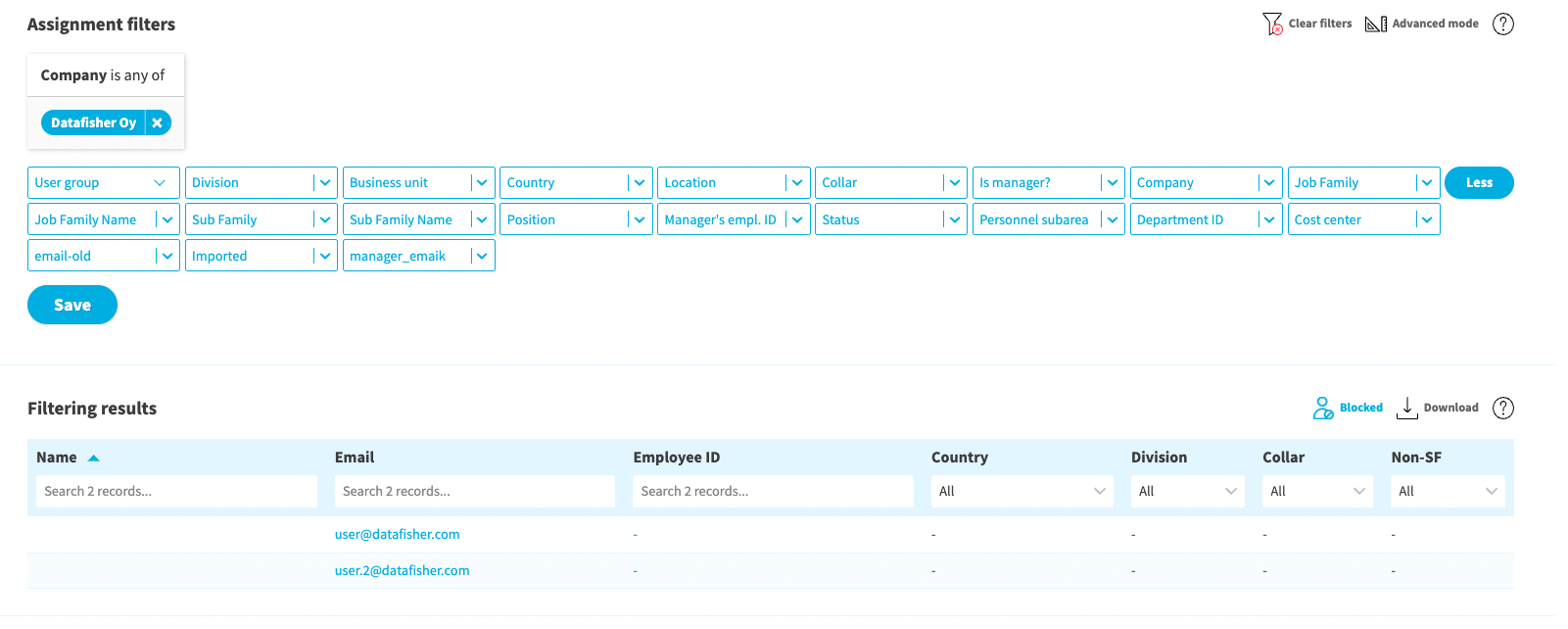
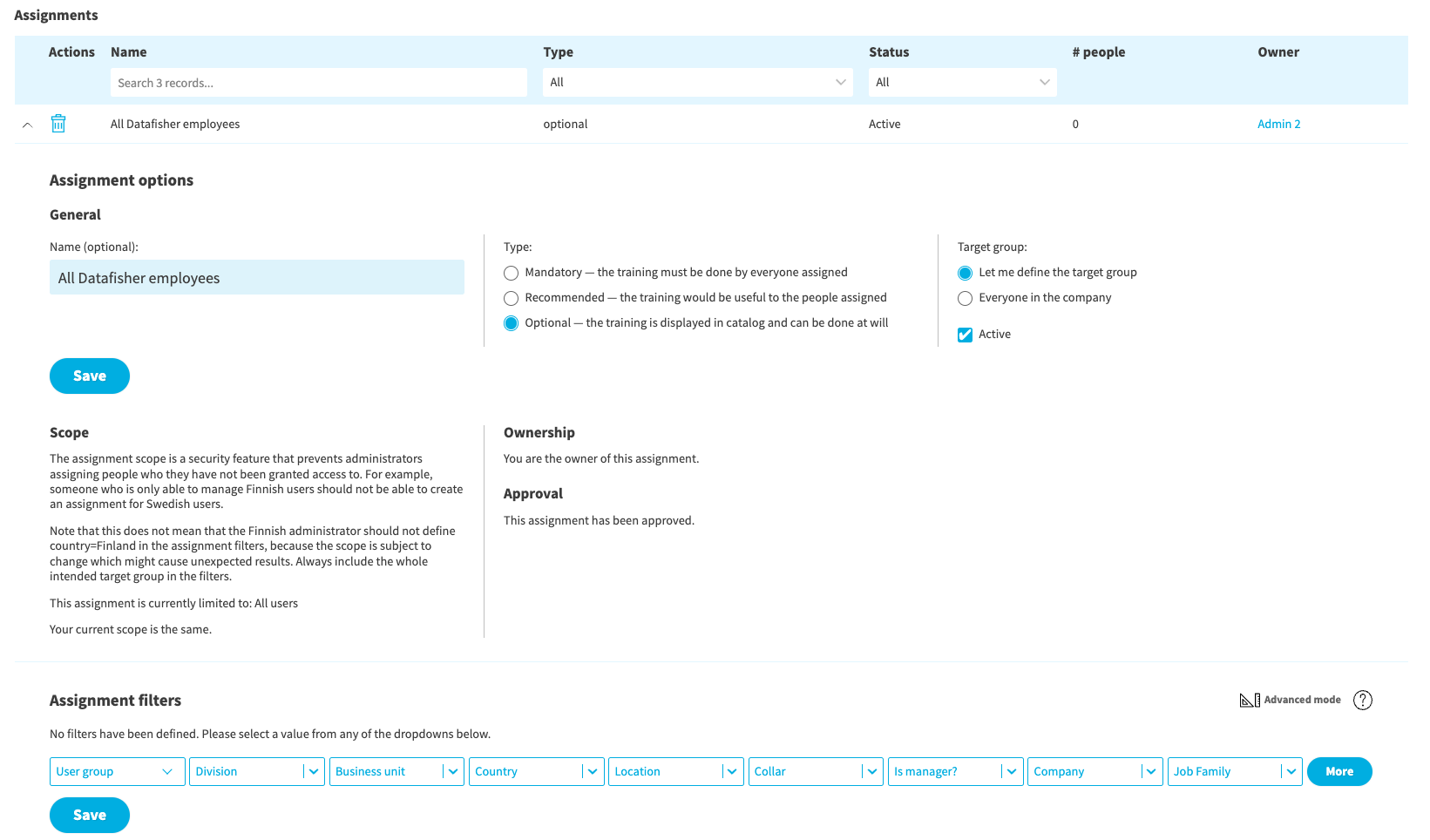
Assignment filters define the target group for the assignment. Filtering results show which learners currently match the selected filters.
Use Advanced mode when the target group needs more precise rules, such as exclusions.
Save the assignment filters after changing the target group.
Manual assignment
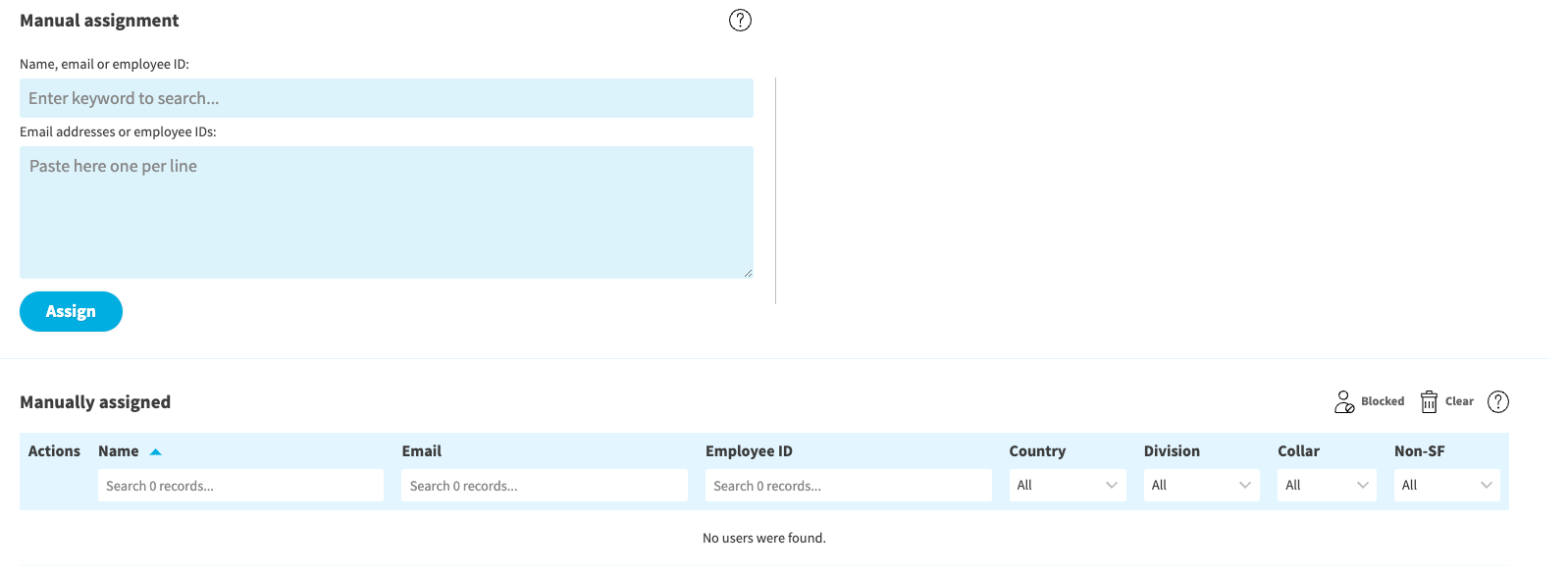
Manual assignment adds specific learners by name, email, or employee ID.
You can also paste a list of email addresses or employee IDs. Each email address or employee ID must be on a separate row.
Scope and approval
Creating a mandatory assignment might require approval from a super administrator.
Assignment approval is off by default. When it is enabled, the assignment can show an Approval section with approval status or an Approve action.
You can assign only learners who are inside your user scope. For example, if your scope covers only users from Finland, you can assign only users from Finland.
Claiming ownership of an assignment group
If an assignment group is owned by another admin, you can claim ownership when you need to manage it, for example during a longer absence.
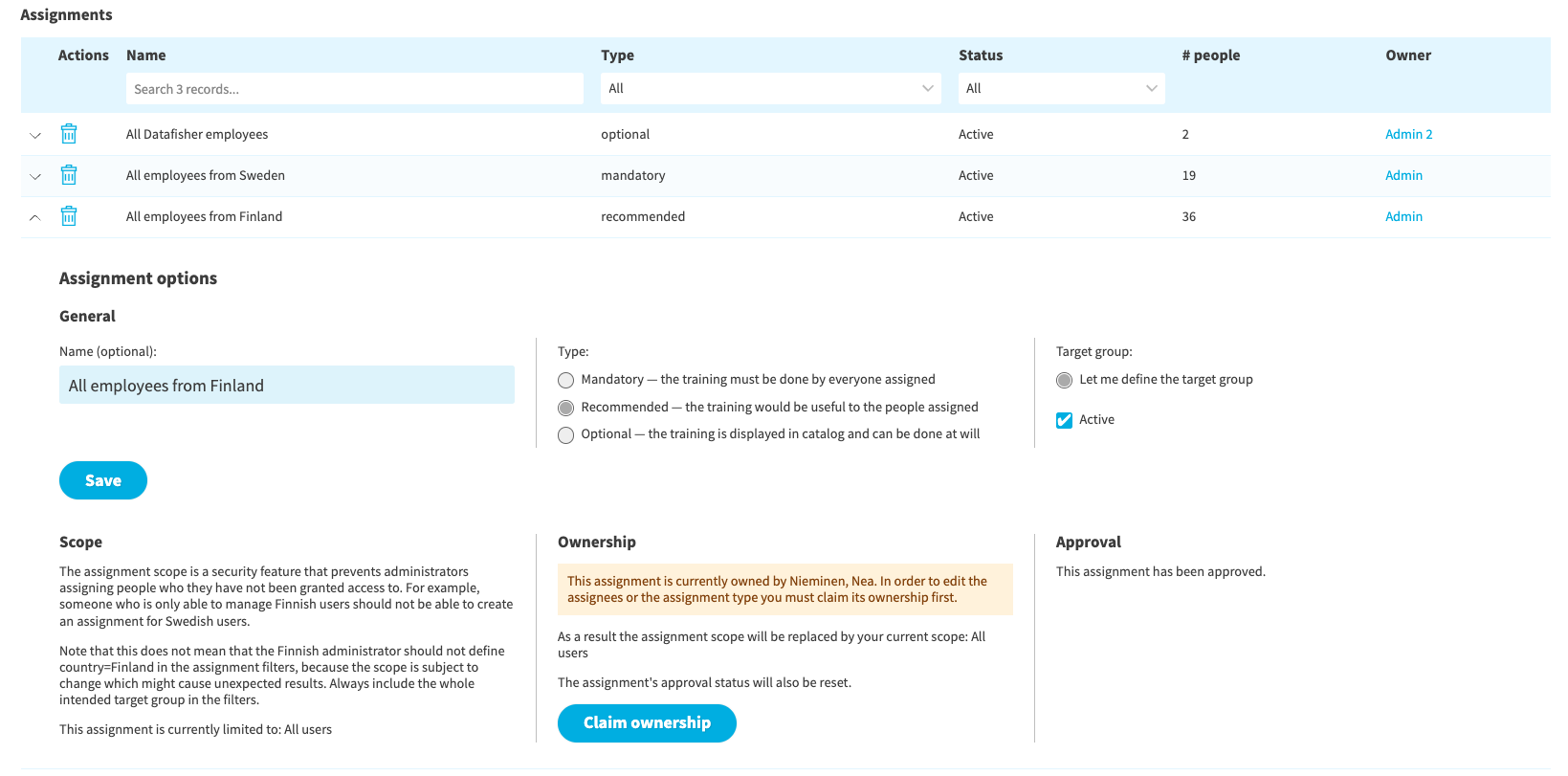
Claiming ownership requires confirmation. The assignment group scope is recalculated according to your user scope, and the confirmation message explains the expected change.
When assignment approval is enabled, claiming ownership also resets the assignment approval status.
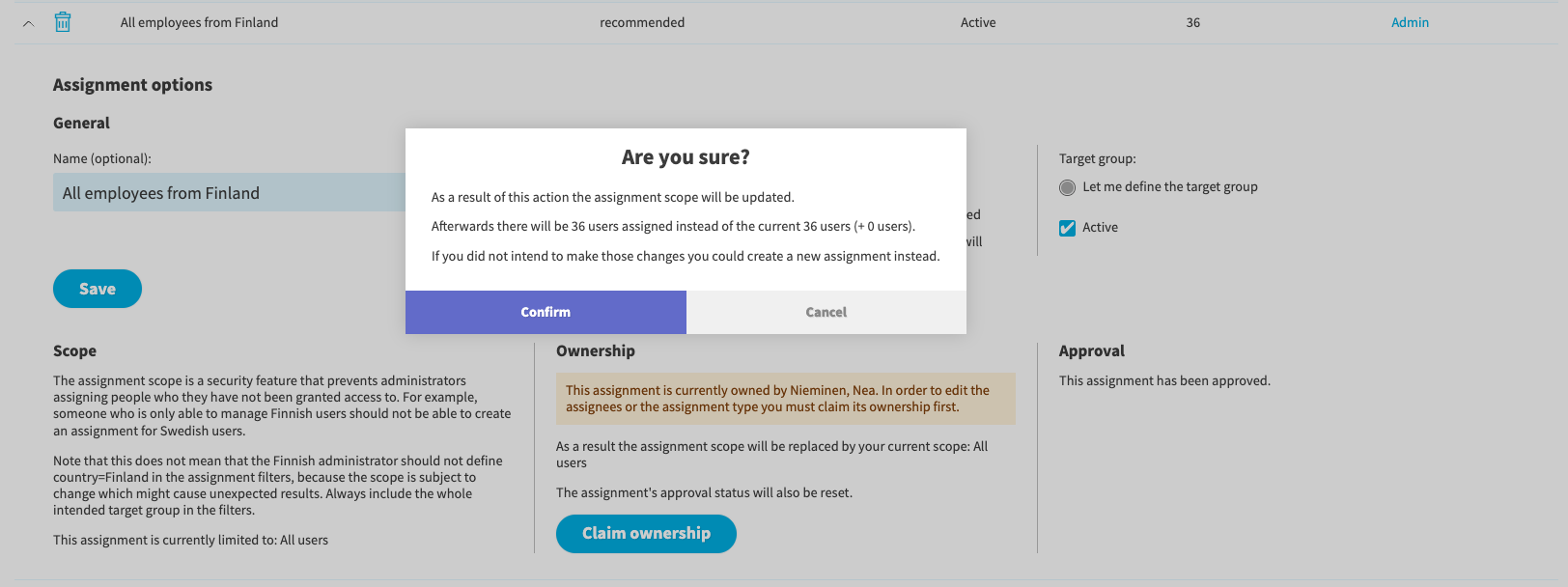
After confirmation, you become the assignment group owner and can manage its details and rules.